For a craftsman, an installer, or a courier, a van is never just a means of transport. It is a mobile workshop, a laboratory on wheels, a revenue tool that must adhere to one fundamental rule: maximum efficiency in the shortest possible time. Driving around construction sites or city streets with tools scattered haphazardly in the cargo area means losing time, damaging materials, and presenting an unprofessional image to customers.
This is why the market for commercial vehicle outfitting is constantly growing. But what are the most sought-after and requested configurations in Italy today?
Let’s look at the map of the most common models, the essential materials, and how they vary based on the trade.
The most requested outfittings
Customization requests vary enormously depending on the profession, but market data (analyzed among the main outfitters and long-term rental players) highlight three major dominant macro-categories.
| Outfitting Type | Target Professions | Key Outfitting Elements |
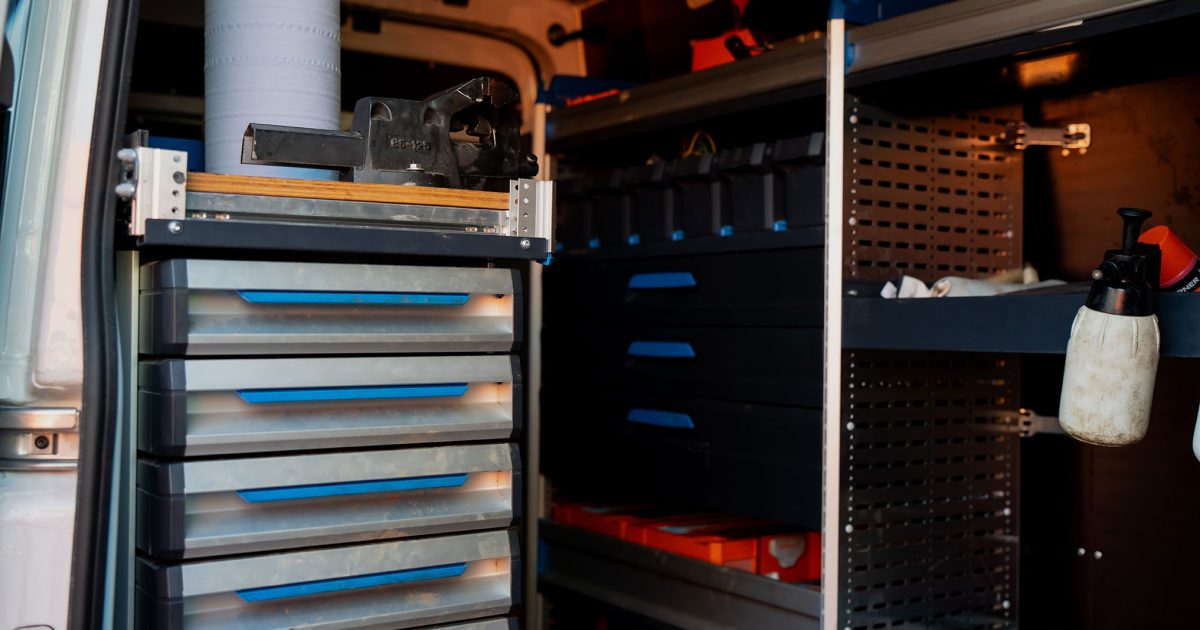
| Mobile workshop | Handymen, mechanics, maintenance workers, craftsmen | Modular drawers, shelving, cabinets, anchoring straps, side paneling. |
| For electricians | Electricians, plant engineers | Transparent drawers for small parts, closed compartments for delicate equipment, integrated storage, electrical outlets and plates. |
| For plumbers and HVAC technicians | Plumbers, boiler and air conditioner installers | Certified load capacity shelving, extractable workbench with steel vise, roof rack with roller for ladders/pipes, floor compartment for cylinders and boilers. |
| Refrigerated / Insulated van | Food couriers, frozen transport, pharmaceutical | Thermal insulation paneling (isothermal), remote refrigeration unit, washable and disinfectable internal walls. |
| For express couriers | Logistics, self-employed carriers, shipping | Fold-down shelves to optimize vertical space, quick cargo fastening systems (load restraint bars). |
The essential basic elements for any outfitting
Regardless of whether you are a plumber or an express courier, there are structural components that represent the “foundation” of any professional outfitting. If you are designing your next van, you cannot do without these elements:
- Cargo area flooring: The mandatory starting point. It protects the van floor from bumps and liquids, levels the surface, and allows secure anchoring of the shelving.
- Side paneling: Indispensable reinforcement sheets to prevent tools, when moving, from denting or puncturing the external sheet metal from the inside.
- Modular drawers: In steel to ensure maximum structural resistance, or in robust plastic to lighten the overall weight of the vehicle.
- Electro-galvanized sheet metal shelving: Treated with cataphoresis painting to resist rust and years of wear.
- Equipped bulkhead cover: Panel positioned behind the driver’s seats (in multilayer wood or steel) used for hanging tools or securing tool cases.
- Handling and lighting systems: Roof racks with a rear roller for easily loading ladders, loading ramps for heavy machinery, and internal LED lamps to ensure perfect illumination even at night or in underground garages.
Materials: what to choose between weight and resistance?
A good outfitting must find the perfect balance between the vehicle’s robustness and weight (so as not to significantly affect the useful payload and fuel consumption). The materials most used by professional outfitters include:
- Birch plywood: Treated with non-slip phenolic resins, it is the undisputed king for floors due to its resistance to water and heavy loads.
- Aluminum: Used for frames and shelves where weight must be saved without losing rigidity.
- Polypropylene honeycomb sheets: Usually 4 mm thick, they are light, ultra-robust, and ideal for side paneling.
- High-strength steel: Reserved for drawer slides and components subjected to very strong mechanical stress.
The paradox of outfitting: more value on board, higher theft risk
There is one detail that many professionals overlook when picking up their newly outfitted van. A medium-quality outfitting costs from 3,000 to 10,000 euros; to this must be added the value of the stored tools (drills, testers, welding machines, boilers, copper fittings), which can easily exceed 5,000 euros.
In fact, an outfitted van turns into a mobile safe full of value.
Leaving this asset protected exclusively by the van’s standard locks (which, as we have seen in theft reports, can be breached in less than a minute) is an enormous business risk. For this reason, the item “cargo security” should be included directly in the outfitting shopping list.
The installation of a supplementary mechanical or smart lock is not a secondary accessory, but the only real shield to protect the economic investment, your hours of work, and your daily peace of mind.